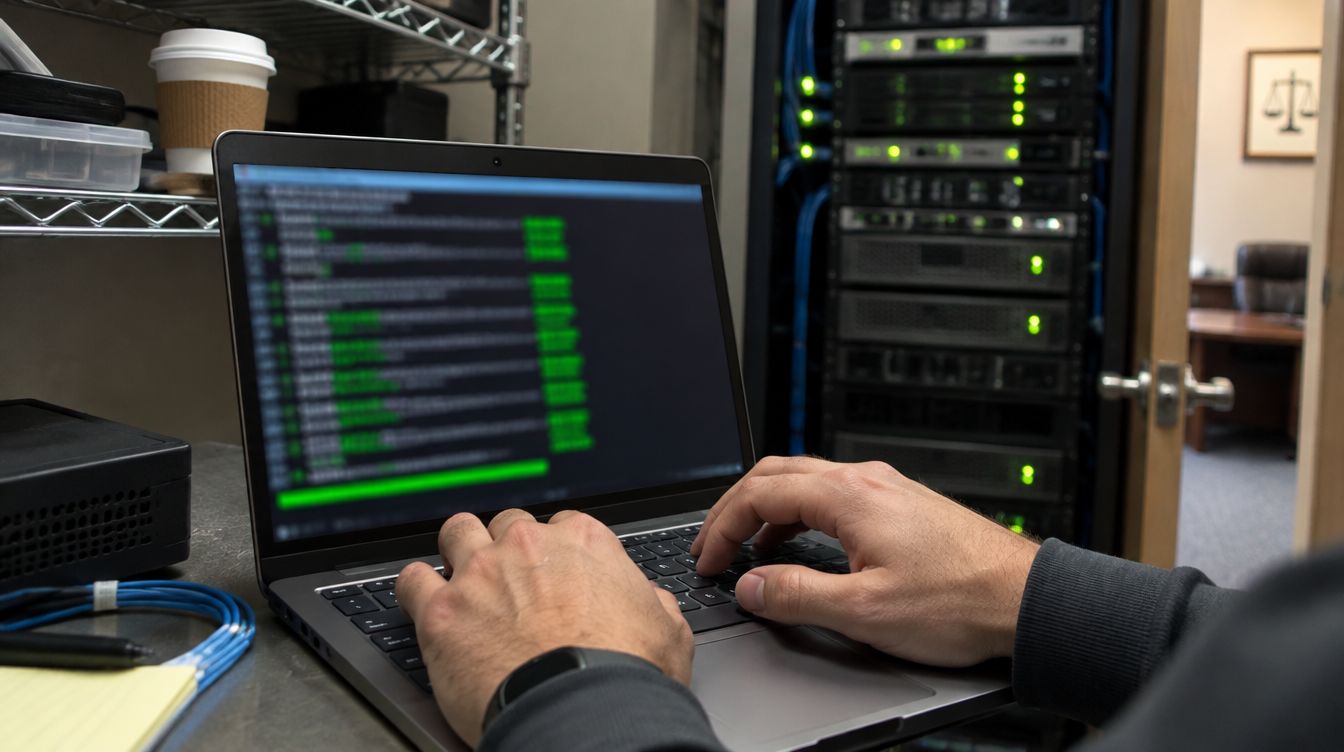
An Atlanta law firm moving floors, opening a second office or gutting the one it has can hand the whole IT side of the job to ClearMax technicians: network cabling, WiFi with a separate guest network, conference room displays, card access on the doors that matter, cameras at the entrances, and the server and computers that sit on top of it all. One written scope, one schedule, and nothing monthly unless the firm asks for it.
Last updated: November 2026
- 1Plan on paper. Drop locations, the network closet, the controlled doors and the camera views are drawn on the firm's floor plan first.
- 2Scope and quote. A written list of everything in the job, with the City of Atlanta permit on it.
- 3Rough-in, then finish. Cable and door wiring before the walls close; devices once the paint is dry.
- 4Prove it. Each cable, door and camera tested, and the records handed to the firm.
Who is this for?
Managing partners, firm administrators and office managers who have signed, or are about to sign, a lease in Atlanta and now have a date to hit. The typical firm here has somewhere between a handful of attorneys and a few dozen, a receptionist, paralegals, a records room, two or three conference rooms and a copier on every floor. It does not have an IT department, and the person who set up the current network may have left years ago.
What that firm needs is not a monthly contract. It needs someone to take the floor plan, decide where every cable, access point, reader and camera goes, coordinate with the general contractor and the building, and leave behind an office that works on the Monday after the move, along with a written record of what was done.
What is included in a law office buildout?
- Network cabling and WiFi: wired drops to each attorney's desk, every conference room, reception, the paralegal pool and each copier, plus ceiling access points with one network for the firm and another for visitors.
- Access control: badge or fob readers on the main entrance, the records room and the network closet, with each lock chosen to meet the egress rules in the building code.
- Business security cameras: entrances, reception and the doors to the records room and closet, and nowhere a client confers with counsel.
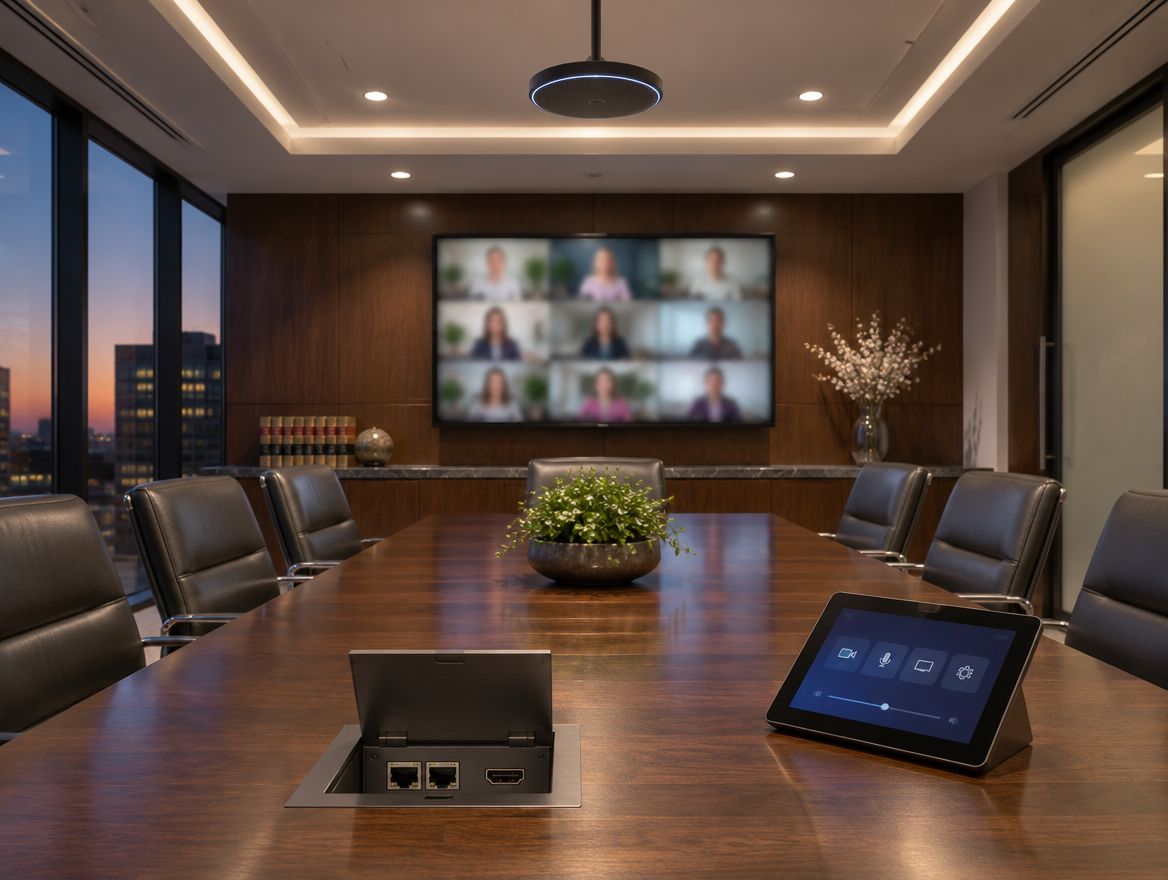
- Displays: wall screens and the cabling behind them in each conference room, so a closing or a mediation runs from a cable, not a hope.
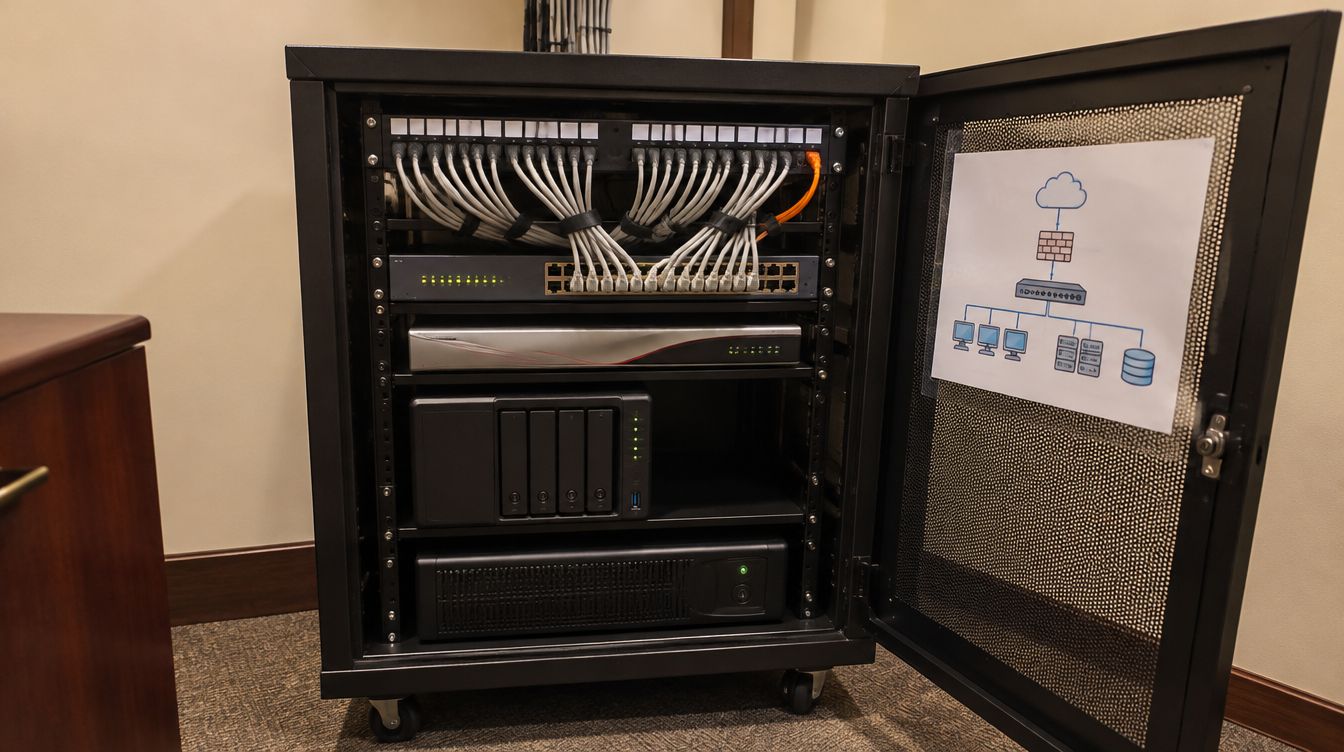
- The closet: patch panel, switch, firewall and a battery, behind a door that logs who opens it.
Servers and computers in an Atlanta office move
They come last, because they depend on everything above. Before a move, two questions decide the shape of the job. Will the firm's document and case management stay on a server in the office, or live with a hosted provider? And will the computers move with the firm, or be replaced on the way? The answers set the size of the closet and its battery, the internet service the firm orders, and how the move weekend is planned.
If the server stays local, ClearMax technicians stand it up in the new closet ahead of time, bring the data across, and have several people open real files from their own desks before anyone relies on it. New computers arrive configured for the person who will use them, with mail, printers and scan-to-folder working. Old machines are listed, and their drives are wiped or destroyed with the date recorded.
Licenses, subscriptions and accounts are bought in the firm's name and stay there. Practice and billing software remain with their vendors; the buildout gets the office ready for them.
Why does a law office need more care than other offices?
The hardware is the same as any office uses. What differs is what passes through it. Georgia's professional conduct rules describe the expectation in a comment to the confidentiality rule. Comment [24] to Rule 1.6 of the Georgia Rules of Professional Conduct says a lawyer should make reasonable efforts to prevent the inadvertent or unauthorized disclosure of, or unauthorized access to, information covered by the rule.
A buildout is where several of those efforts are decided for years at a time. Who can open the records room. Can a visitor's laptop in conference room B see the firm's copier? Can a camera in the hallway see through the glass into the room where a client is talking? None of those are legal questions for an installer to answer, and nothing on this site is legal advice. They are design questions, and the design should be written down so the firm can show what it did.
One Georgia point is worth knowing because it surprises people. Georgia's breach-notice statute, O.C.G.A. 10-1-912, places its notice duty on any information broker or data collector, and the Code defines a data collector as a state or local government body. For a private firm the starting point is the Bar's confidentiality duty above, and any question about notice belongs with the firm's own counsel.
What is different about building in Atlanta?
The permit. The City of Atlanta's permit guide limits its exemption for low voltage systems such as security alarms, phone and cable lines to existing single-family, two-family or duplex homes. Cabling, card access and cameras in an office building are permitted work, so the permit and its inspection go on the schedule from the start.
The permit system pause. The City has announced that permit operations stop from 5:00 p.m. on December 10 until 8:00 a.m. on December 21, 2026, while it moves to its new ATL OPAL system. A firm planning a move around the turn of the year files before the pause or plans around it.
The building code changes on New Year's Day. Georgia's Department of Community Affairs has adopted the 2024 International Building Code with Georgia amendments, effective January 1, 2027. Door locking rules live in that code, so a project that is permitted in December and finished in January names the code edition it was designed to.
What goes wrong when four companies do it?
A typical move brings in a cabling contractor, an alarm company, a camera vendor and an IT provider. Each arrives with its own drawing and its own idea of the closet. The cameras need switch ports nobody ordered. The door controller needs a network drop nobody pulled. The conference room screen goes up on a wall with no cable behind it. On the first morning, each vendor explains why the problem belongs to another one.
A single scope removes that gap. The same people draw the drops, the doors, the cameras and the closet together, check that the switch can power every access point and camera, and test everything as one system before handover. Afterwards, the firm can choose a managed IT plan for ongoing managed IT, with monitoring and cybersecurity, or simply keep the records and call when the next project comes up. The buildout is priced the same way either way.
Office hours and how to get in touch
- Phone
- Weekdays, 8:00 AM to 5:00 PM Eastern, at (470) 296-8293.
- Form
- Any time, through the contact page. A reply follows the next business day.
- On-site work
- Booked around the contractor, the building and the firm's court calendar, including nights and weekends.
What Atlanta firms ask first
How early should we involve IT in a lease?
Before the space plan is signed off. Moving a drop or a closet on paper takes minutes; moving it after drywall takes days.
Can the work happen while we keep practicing?
Yes. In an occupied office, loud work and the switch-over are scheduled after hours, one room or one door at a time.
Do we need a permit for cabling in an existing office?
For new installation in an office building inside the City of Atlanta, plan for one. The scope names the permit, and it is scheduled with the other inspections.
What do you need to quote?
The floor plan, how many people, the move date, and what is coming from the old office. Send what you have and the reply asks for the rest.
How is the quote put together?
From the details the firm sends. If the job proves larger than described, the firm hears about it before any extra work, and the bid is revised.